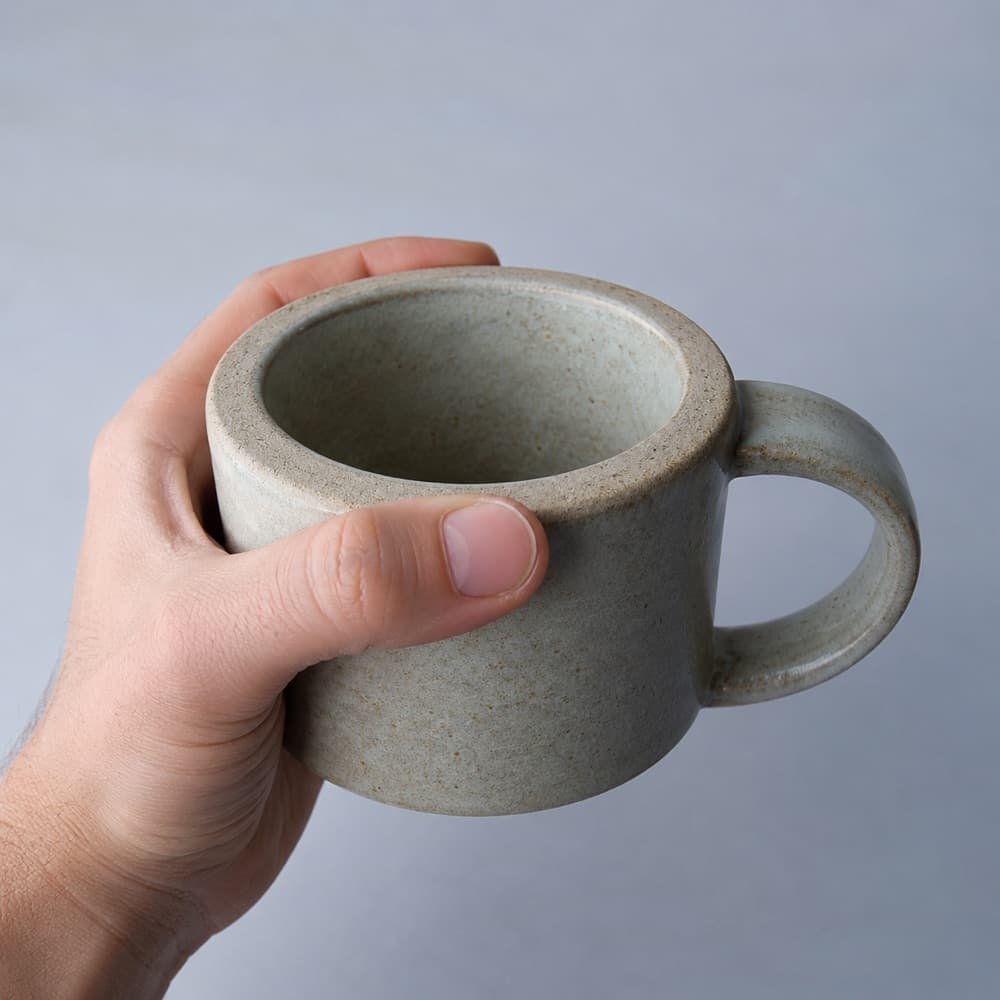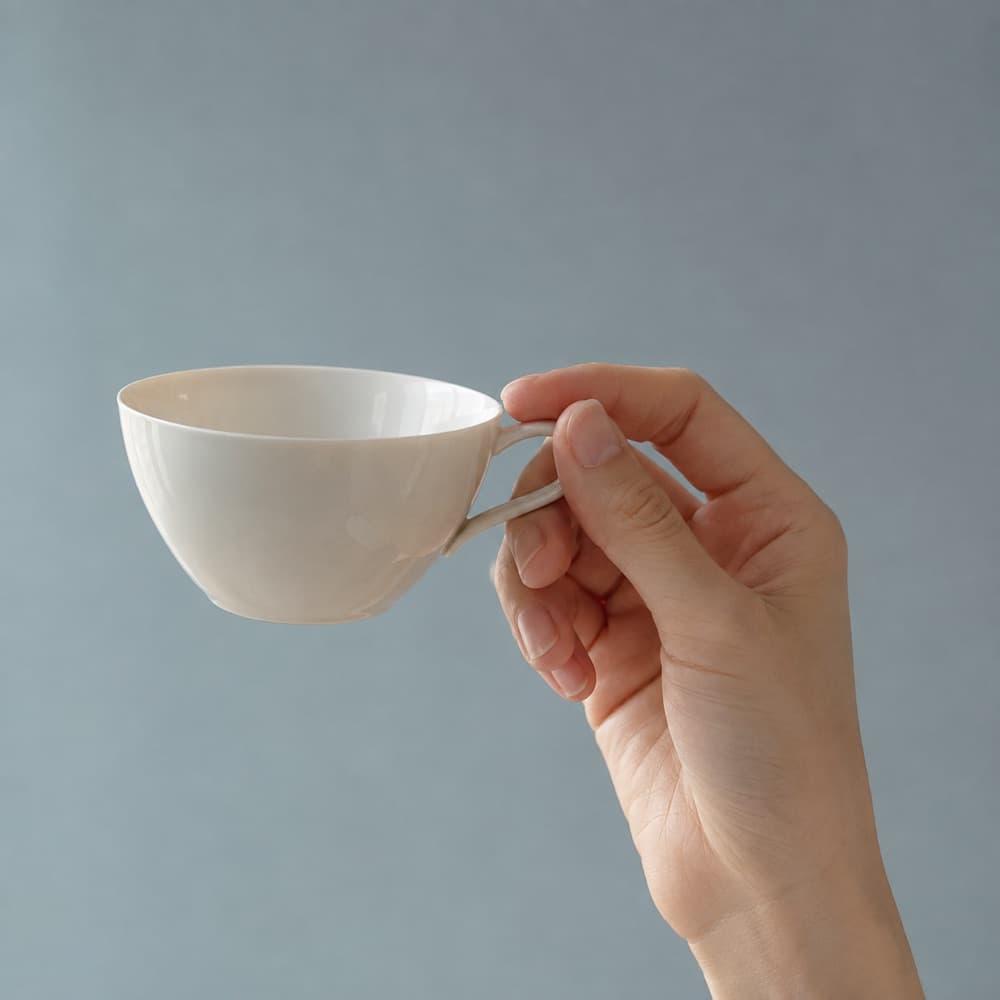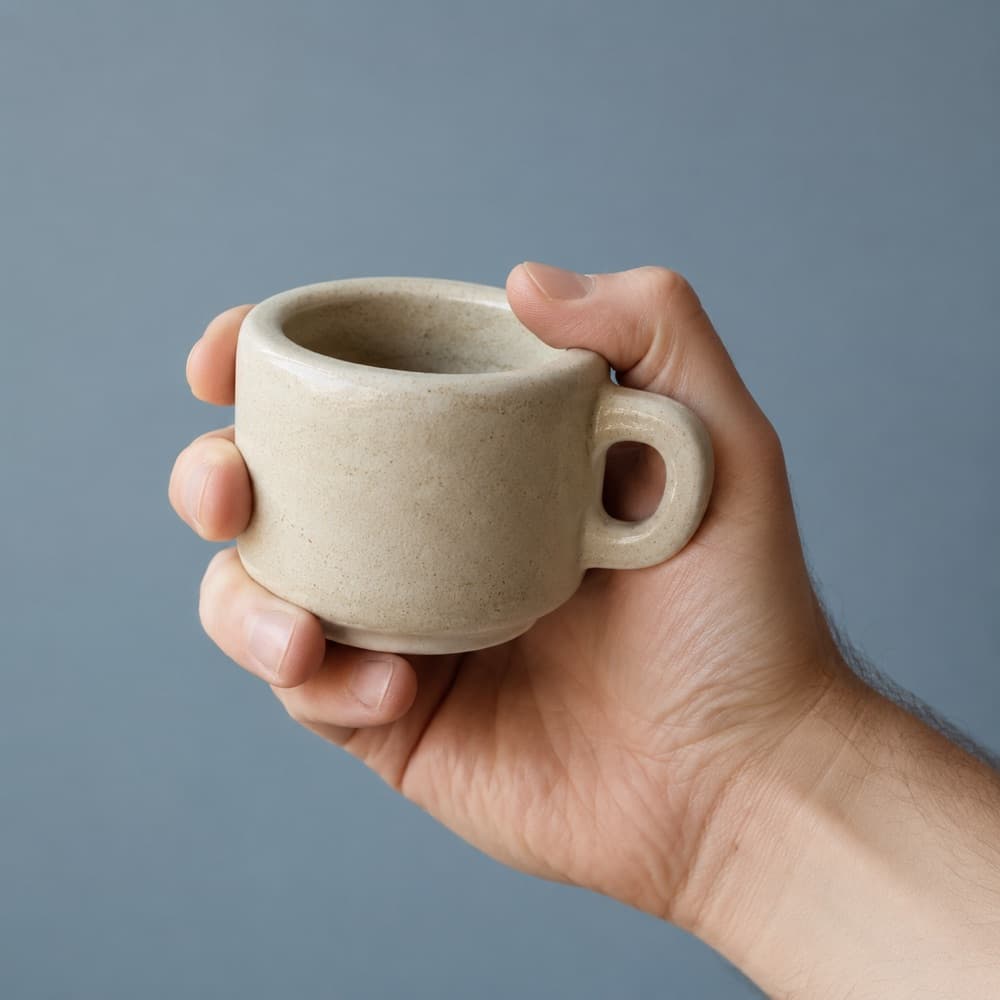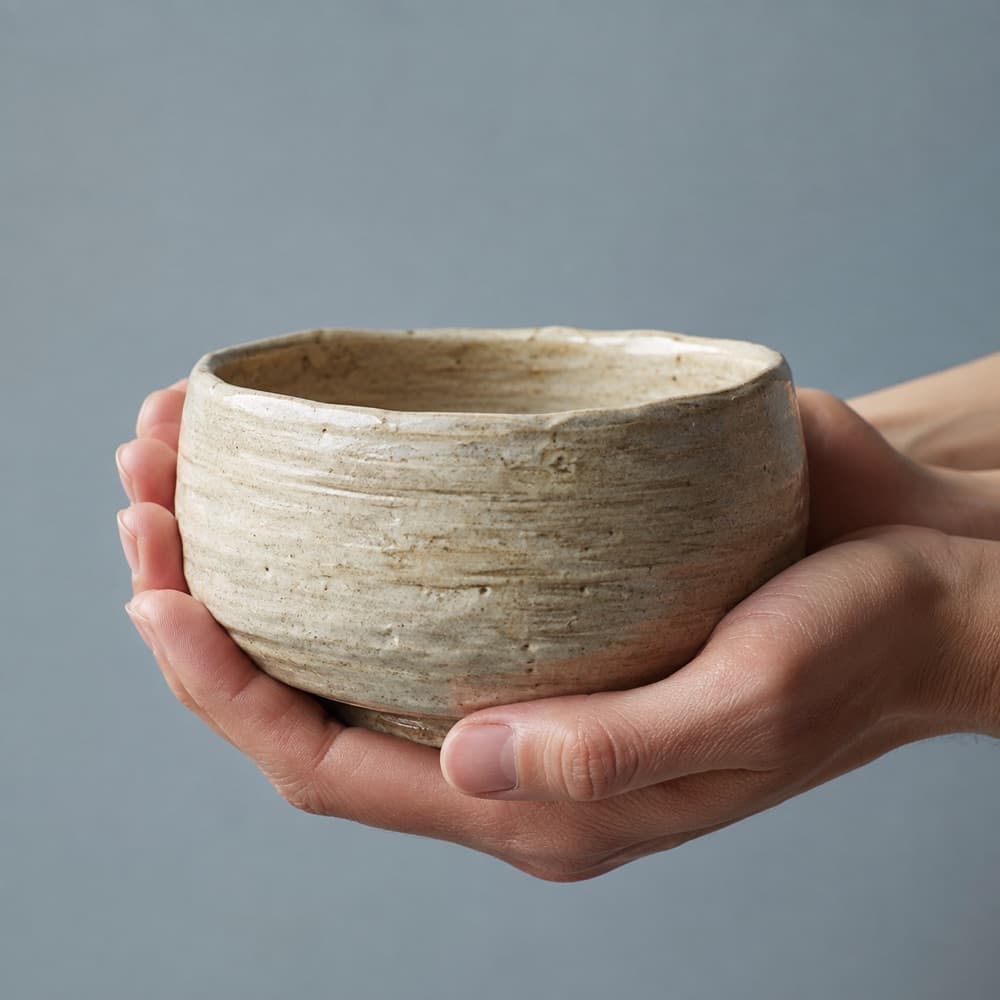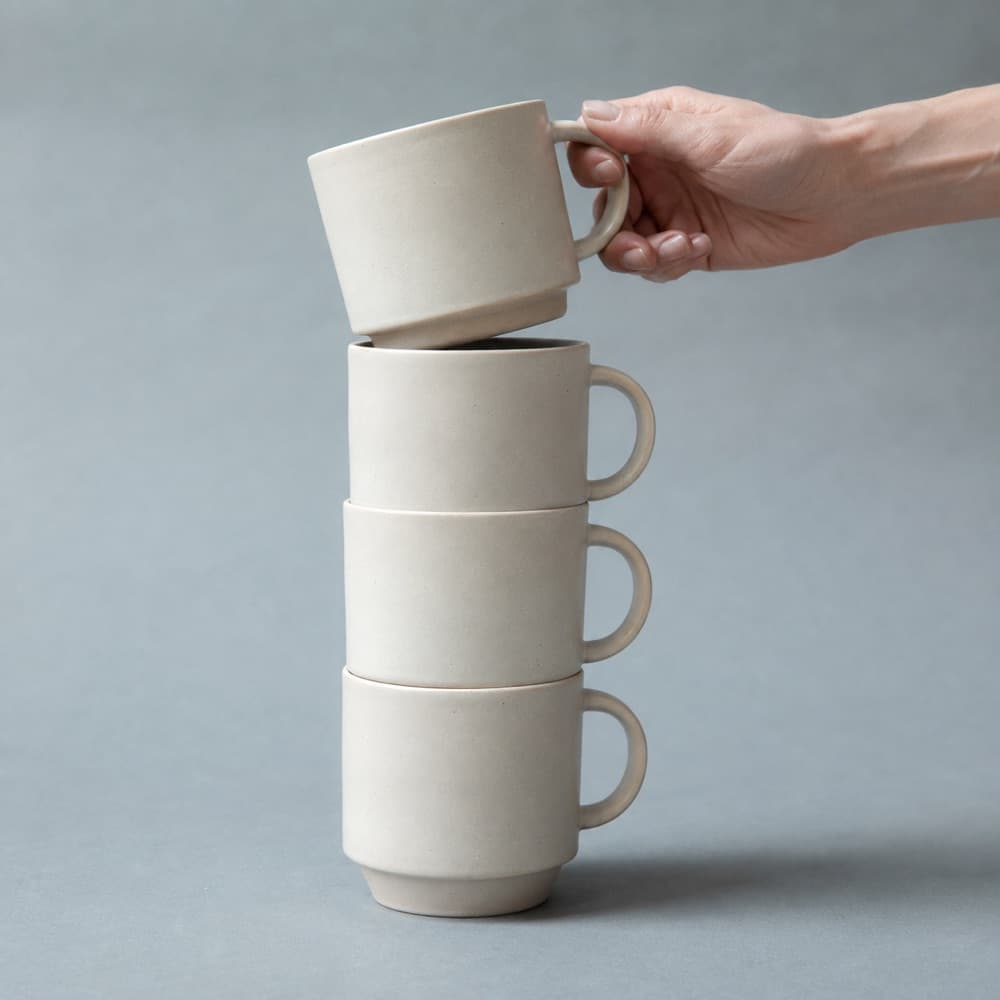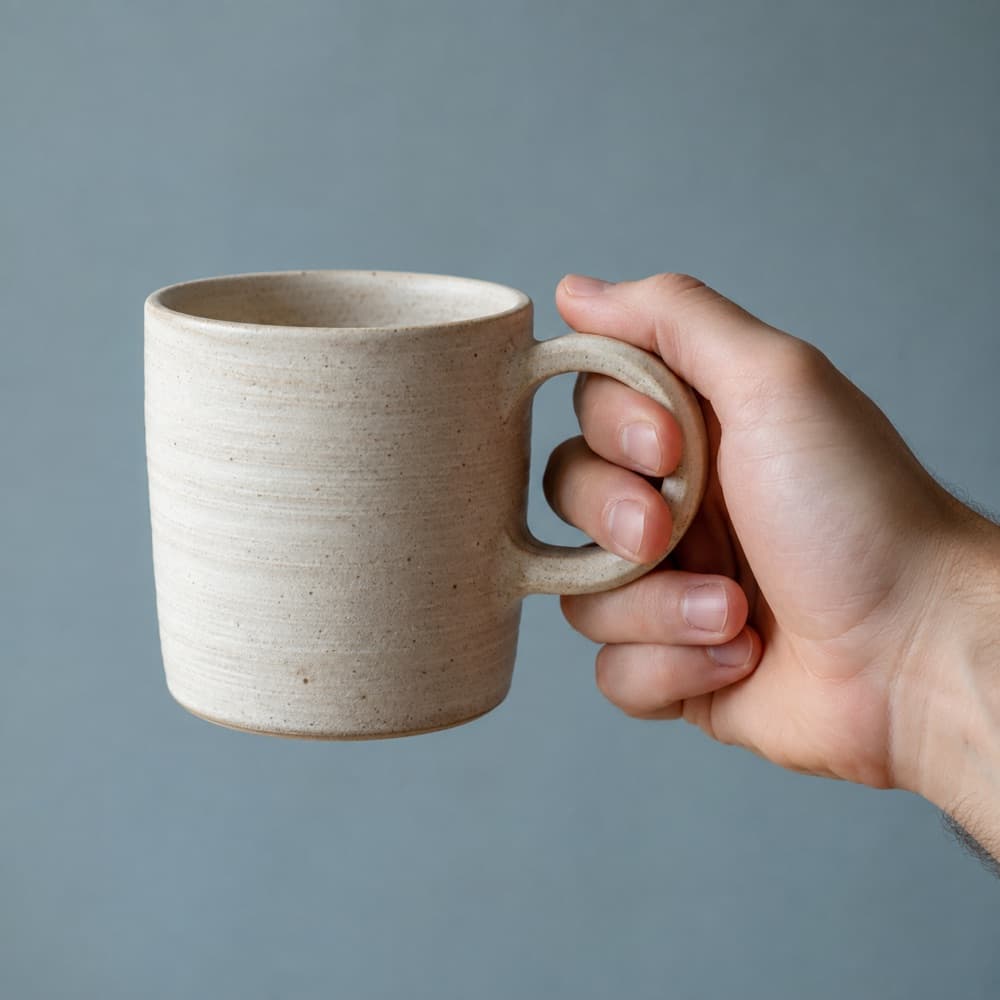
Everyday Mug 300 ml
The default. If you only buy one, buy this one.
- Capacity
- 300 ml
- Handle
- 32 mm
DKK 165incl. moms
All prices in Danish kroner (DKK), incl. 25% moms · Free delivery in Denmark over DKK 600
Measured, not just photographed
One cup, every day. We publish the four numbers that decide whether you actually reach for a cup — how much it holds, how wide the rim is, how much room your fingers get, and how thick the wall is — plus a measured cooling reading for every one.
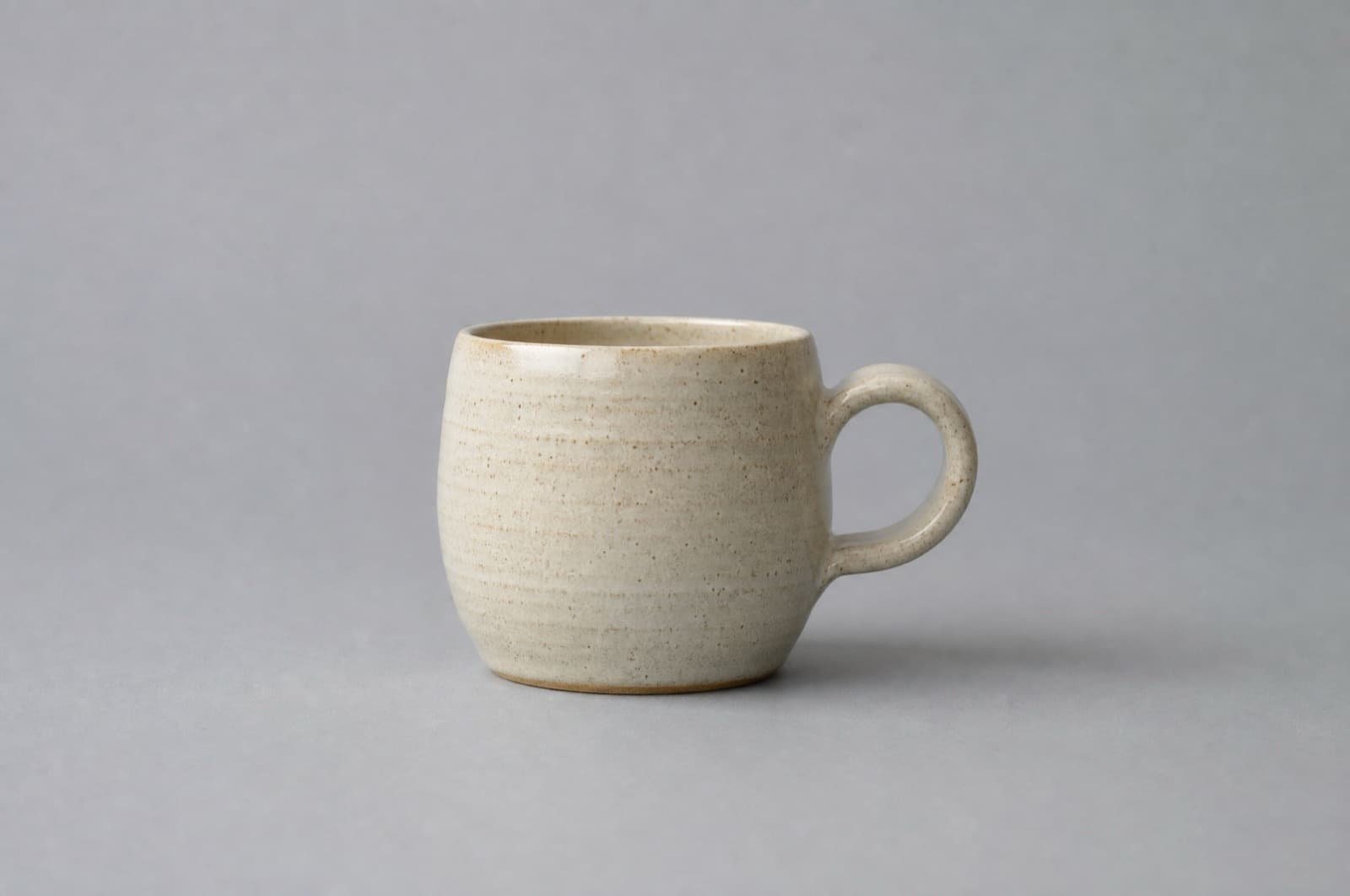
Shown: Everyday Mug 300 ml, DKK 165
What we publish
A photograph tells you what a cup looks like. It does not tell you whether it fits your hand, fits the dishwasher, or is still warm when you get back to it. So we measure.
01
Measured to a fill line 10 mm below the rim, which is where a cup you intend to carry actually gets filled to. Not the number you get by filling it to the brim in a laboratory.
02
A wide rim spreads a milk pour and loses heat quickly. A narrow one concentrates the drink and keeps it. Neither is better; they are different cups for different drinks.
03
The clear space inside the loop. This is the number nobody publishes and the one that decides whether a mug pinches your knuckles every single morning.
04
Measured at mid-height. Thicker walls cool more slowly and weigh more. Every millimetre here is a trade between the two, and we publish both sides of it.
The fifth number
We fill each cup with 95 °C water in a 20 °C room, leave it uncovered, and read the temperature at the centre after ten minutes. Same water, same room, same clock, every cup.
Ceramic has no vacuum layer. A thicker wall cools more slowly than a thin one, and that is the whole of the effect — none of these cups keep a drink hot the way a vacuum flask does.
A bigger cup also cools more slowly than a small one, simply because it holds more water. Compare cups of similar size, or the number will mislead you.
The full method, and its limits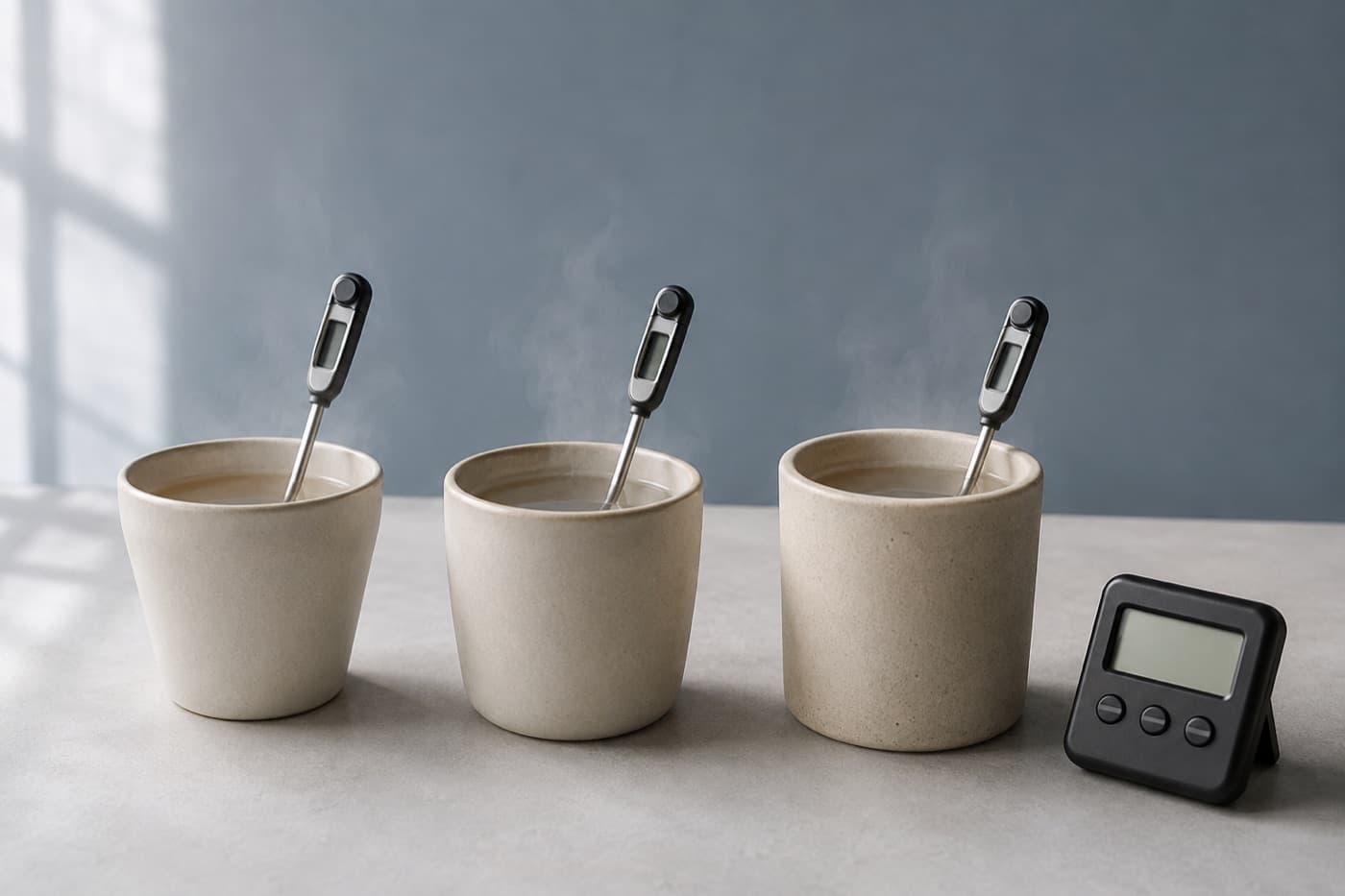
Same test, three cups of roughly comparable size, different wall thicknesses.
| Minute | Tea Cup Thin-Wall 220 ml — 3 mm wall | Everyday Mug 300 ml — 6 mm wall | Thick-Wall Mug 320 ml — 9 mm wall |
|---|---|---|---|
| 0 | 95 | 95 | 95 |
| 2 | 86 | 88 | 89 |
| 4 | 78 | 82 | 83 |
| 6 | 71 | 76 | 78 |
| 8 | 64 | 71 | 73 |
| 10 | 59 | 66 | 69 |
The reading at ten minutes is measured. The points between are Newton’s law of cooling fitted through it — see how we measure cooling.
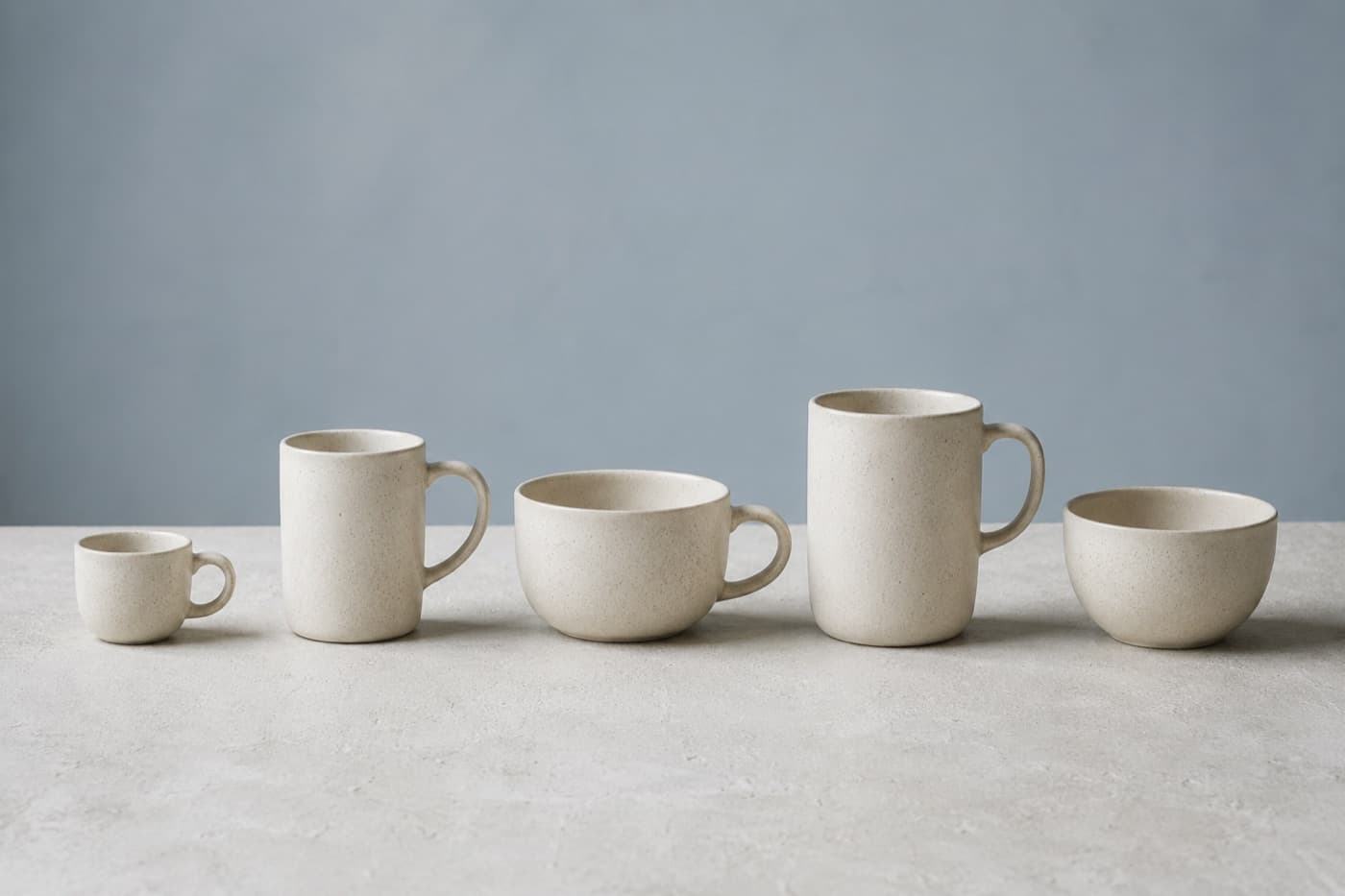
Cup Match
Three questions, and the answers filter on measurements rather than taste. Tell it your drink goes cold and it will only return walls of 8 mm or more. Tell it handles pinch and it will only return openings of 32 mm or more. It does not talk you into anything else.
Six lines
Sixty to a hundred and fifty millilitres. Small enough that the wall thickness decides how long you have to drink it.
The two-to-four-hundred millilitre middle of the range, where the handle opening matters more than anything else.
Narrower mouths, longer steeps, and the two cups here that come with a lid or a basket.
Four hundred millilitres and up. Heavy when full, so the handle — or the absence of one — is the deciding number.
Nothing to grip but the cup itself, which makes wall thickness a question of comfort rather than temperature.
Three things that keep a cup usable. None of them touch a drink.
A place to start
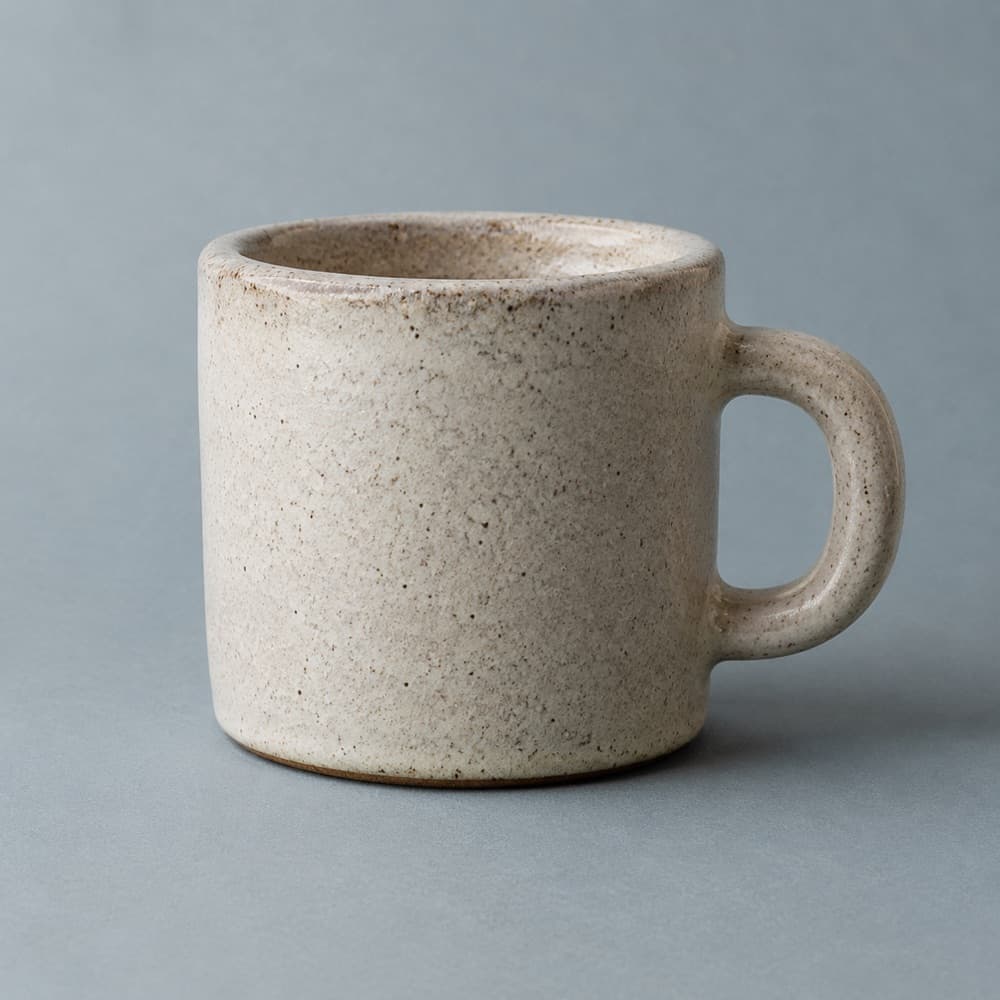
The default. If you only buy one, buy this one.
DKK 165incl. moms
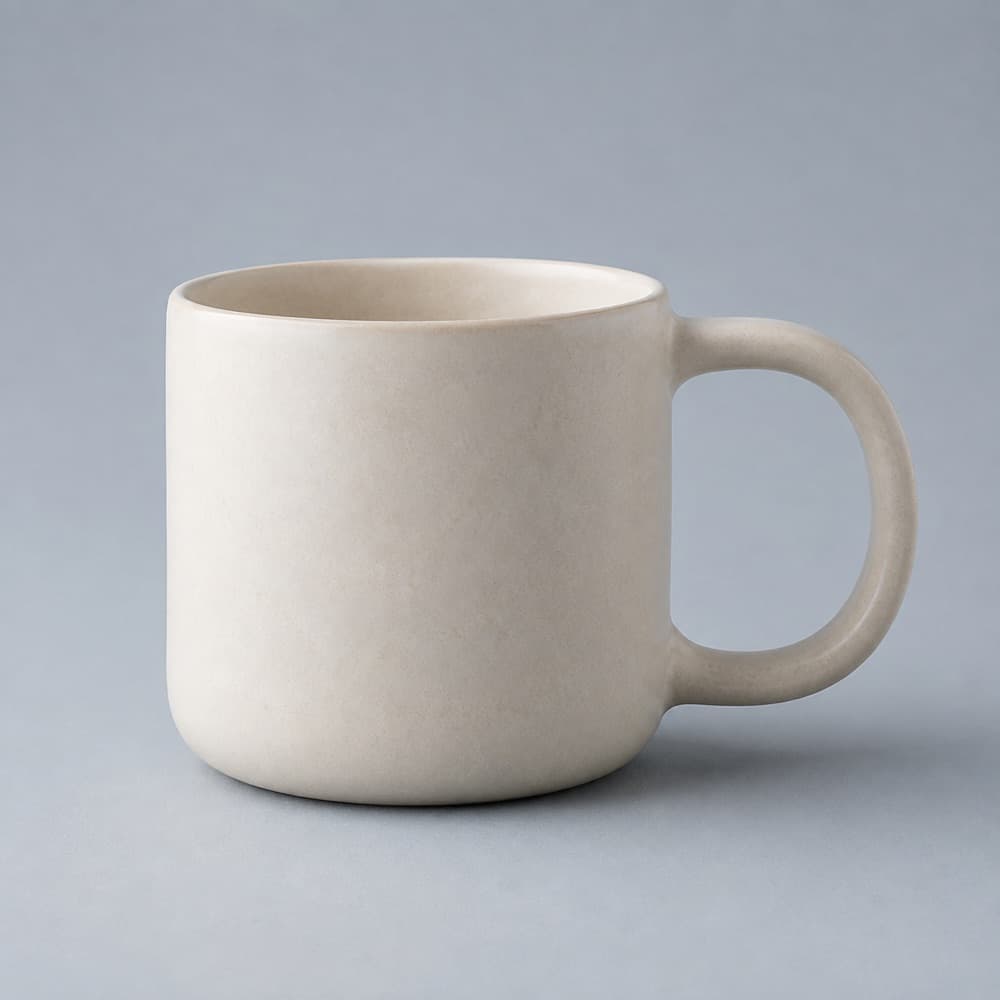
You drink slowly and you have given up on the last third going cold.
DKK 215incl. moms
Large hands, or a mug you hold rather than grip.
DKK 255incl. moms
Widest handle
38
mm clear opening
Four fingers go through the Big Handle Mug 480 ml. The narrowest loop we make is 21 mm, on the Ristretto Cup. Everything else sits between the two.
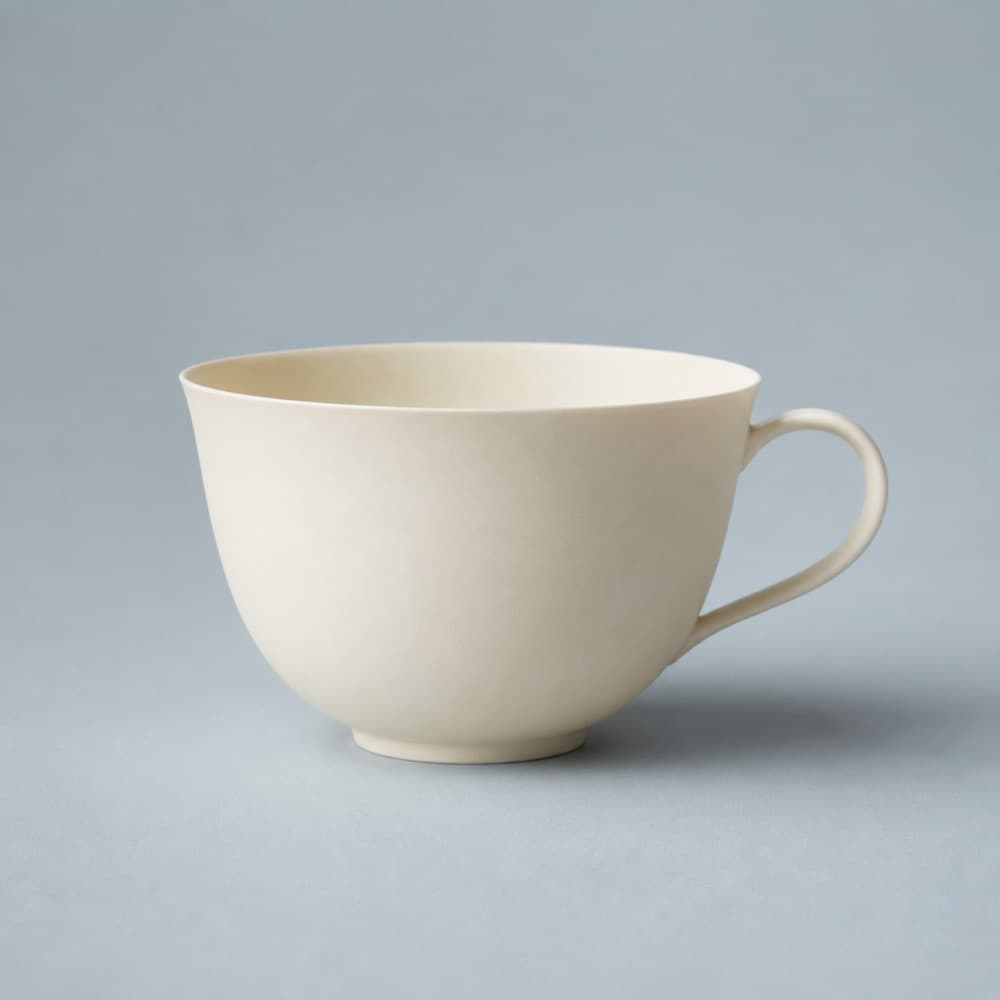
You drink tea too soon and regret it.
DKK 175incl. moms
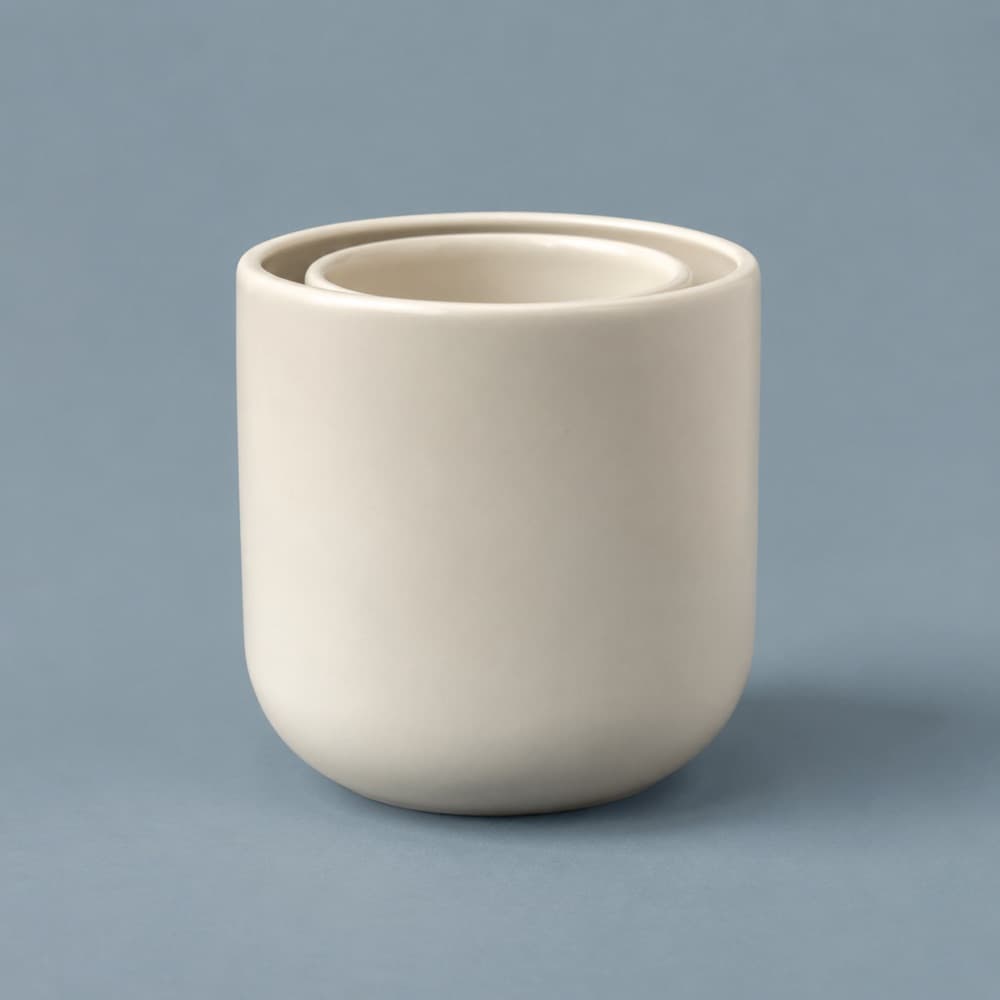
You hold your cup with bare hands and you drink slowly.
DKK 295incl. moms
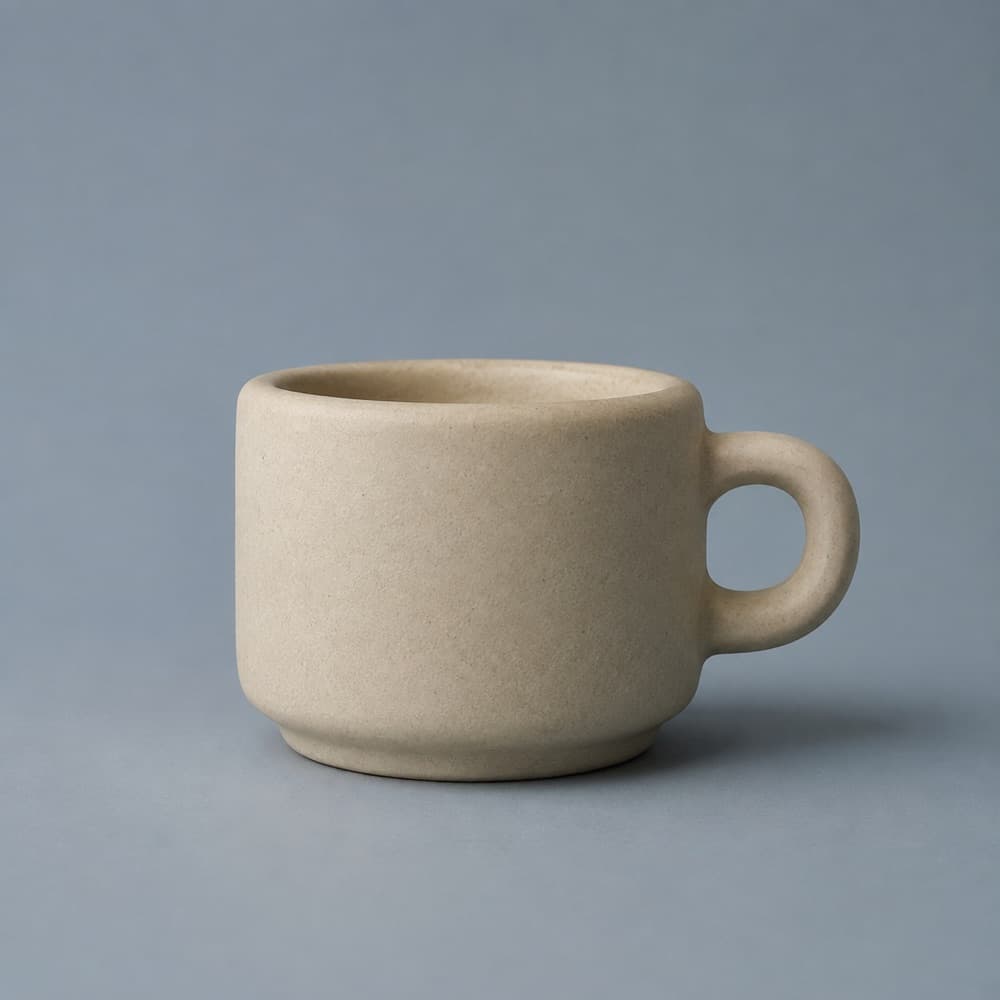
The slowest-cooling small cup we make.
DKK 115incl. moms
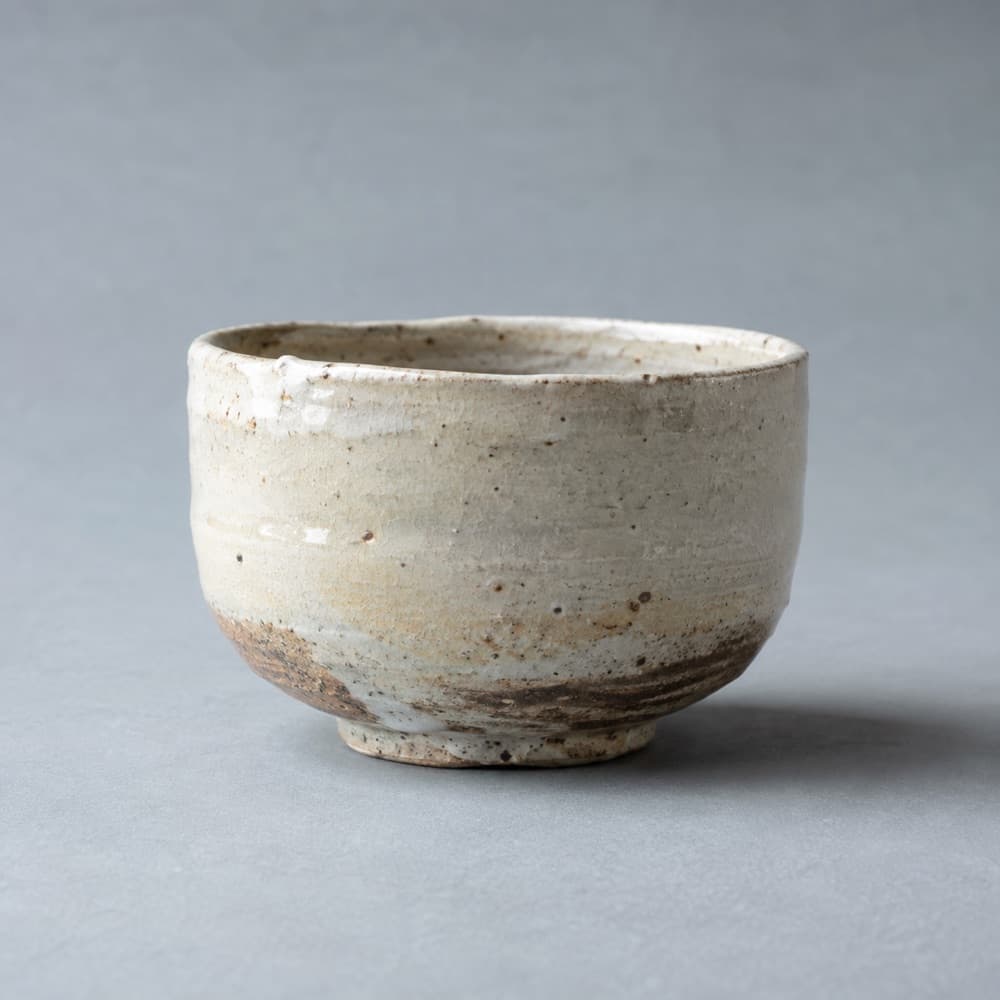
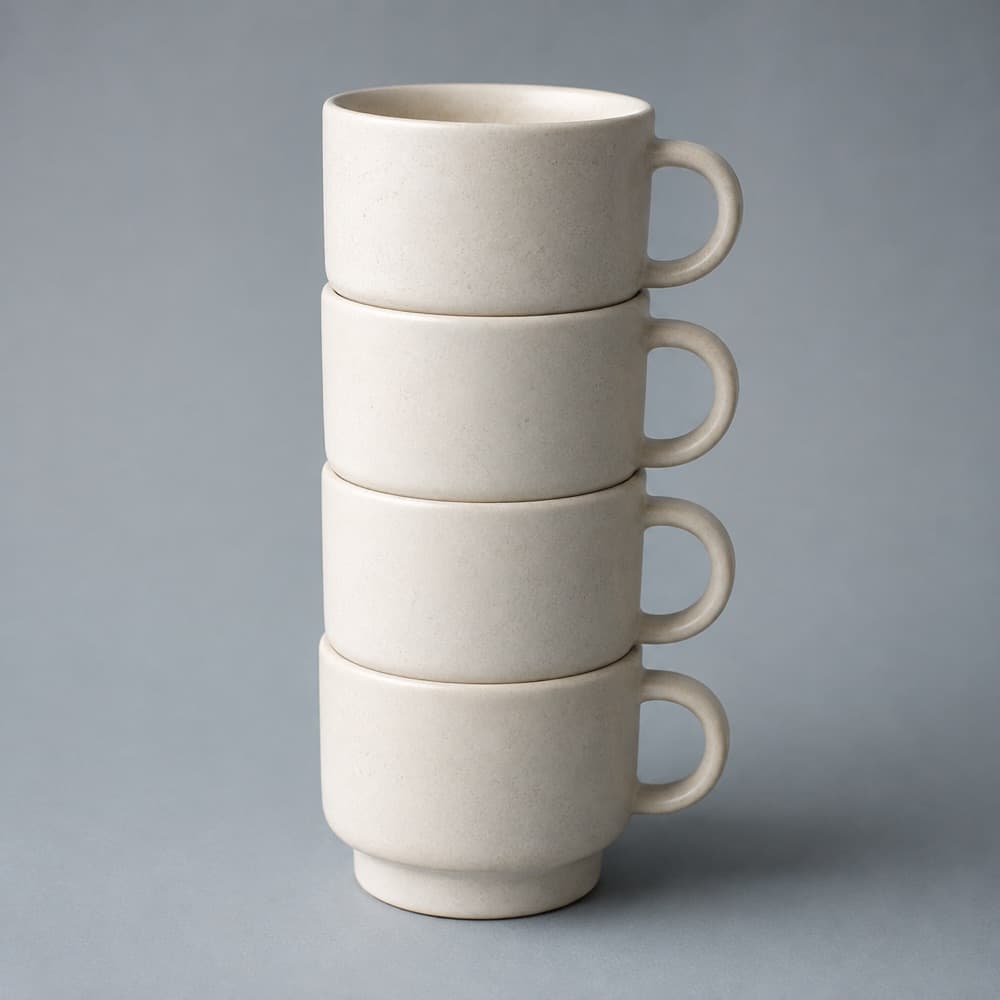
A small kitchen with too many mugs in it.
DKK 175incl. moms
Food contact
Every drinking vessel here is a food contact article in law, and is treated as one in the code that runs this shop.
Where we stop
Written down so nobody has to guess.
We sell cups only — things you drink out of, plus a small number of items that look after them. No plates, no bowls for food, no serving dishes, no vases, no ornaments.
Every drinking vessel here is a food contact article and is sold with a supplier Declaration of Compliance on file.
Coasters, brushes and cloths are not food contact articles and are labelled as such on their product pages.
We sell our own product line. We do not resell other studios' work and we do not act as an agent for individual ceramicists.
We are a retailer of consumer tableware. We do not offer engraving, personalisation or any made-to-order service, which is why every item here carries the full 14-day right of withdrawal.